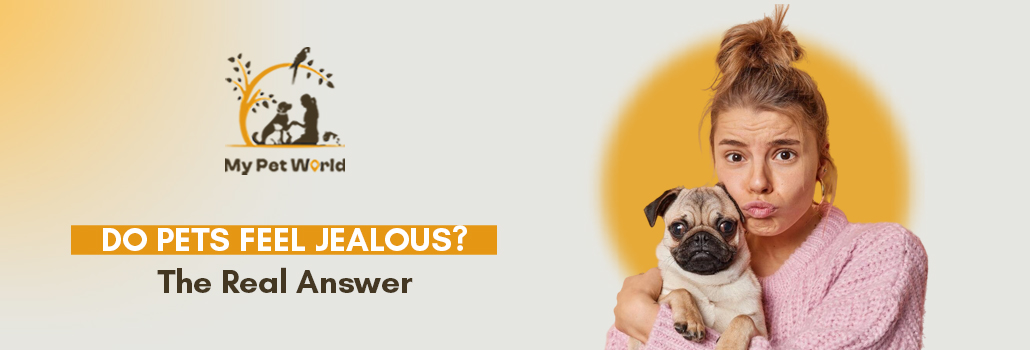
If you’ve ever noticed your dog suddenly pushing itself between you and another pet, or your cat demanding attention the exact moment you’re busy, you’re not imagining things. Many pet parents ask the same question: do pets actually feel jealous? The answer is yes,but not in the same complex way humans do. What pets experience is a more instinctive, emotional response linked to attachment, attention, and routine.
Dogs are the most studied animals when it comes to this behavior. Research has shown that dogs can display what experts call “social jealousy.” For example, when a dog sees its owner giving affection to another dog or even an object that looks like one it may react by barking, nudging, or trying to physically get in between. This behavior is not about spite or resentment. Instead, it’s driven by the dog’s strong bond with its owner and its desire to maintain that connection. In simple terms, your dog isn’t thinking, “I’m jealous,” but rather, “I don’t want to lose your attention.”
Cats, while often labeled as independent, are not completely immune to these feelings. They may show subtle but noticeable signs when they feel left out. A cat might jump onto your lap while you’re working, interrupt you when you’re interacting with another pet, or suddenly become more vocal and clingy. These behaviors are tied to their sense of territory and routine. When something disrupts their usual environment like a new pet, a guest, or even a change in your schedule they may respond in ways that look very similar to jealousy.
What’s important to understand is that these reactions are a mix of emotion and learned behavior. Pets quickly realize what actions bring your attention back to them. If jumping, barking, or meowing works once, they’re likely to repeat it. Over time, this becomes their strategy for staying connected with you. This is especially common in multi-pet households, where attention can feel like a shared resource, or during big life changes such as moving homes or welcoming a new family member.
Instead of seeing this behavior as a problem, it helps to view it as communication. Your pet is expressing a need usually for attention, reassurance, or stability. The way you respond plays a big role in shaping their behavior. Giving in to attention-seeking at the wrong moment can reinforce it, while ignoring it completely can make your pet feel insecure. The balance lies in providing consistent, positive attention at the right times, so your pet feels safe without needing to compete for your focus.
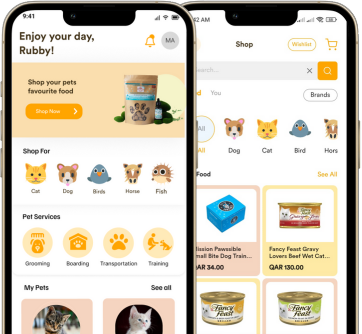
One of the simplest ways to reduce these behaviors is by making your pet feel included. Regular playtime, mental stimulation, and small gestures of affection can make a huge difference. Even introducing a new toy or rotating their favorite ones can help redirect their energy in a positive way. If you’re looking for ways to keep your pet engaged and happy, you can explore options through My Pet World, where you’ll find products and services designed to support your pet’s well-being and strengthen your daily connection with them.
At the end of the day, pets may not experience jealousy with human-level complexity, but their emotions are real and meaningful. These reactions come from love, attachment, and a desire to stay close to you. When you understand where this behavior comes from, it becomes easier to respond with patience and intention. And that’s what truly defines great pet parenting not just meeting your pet’s physical needs, but understanding their emotional world as well.